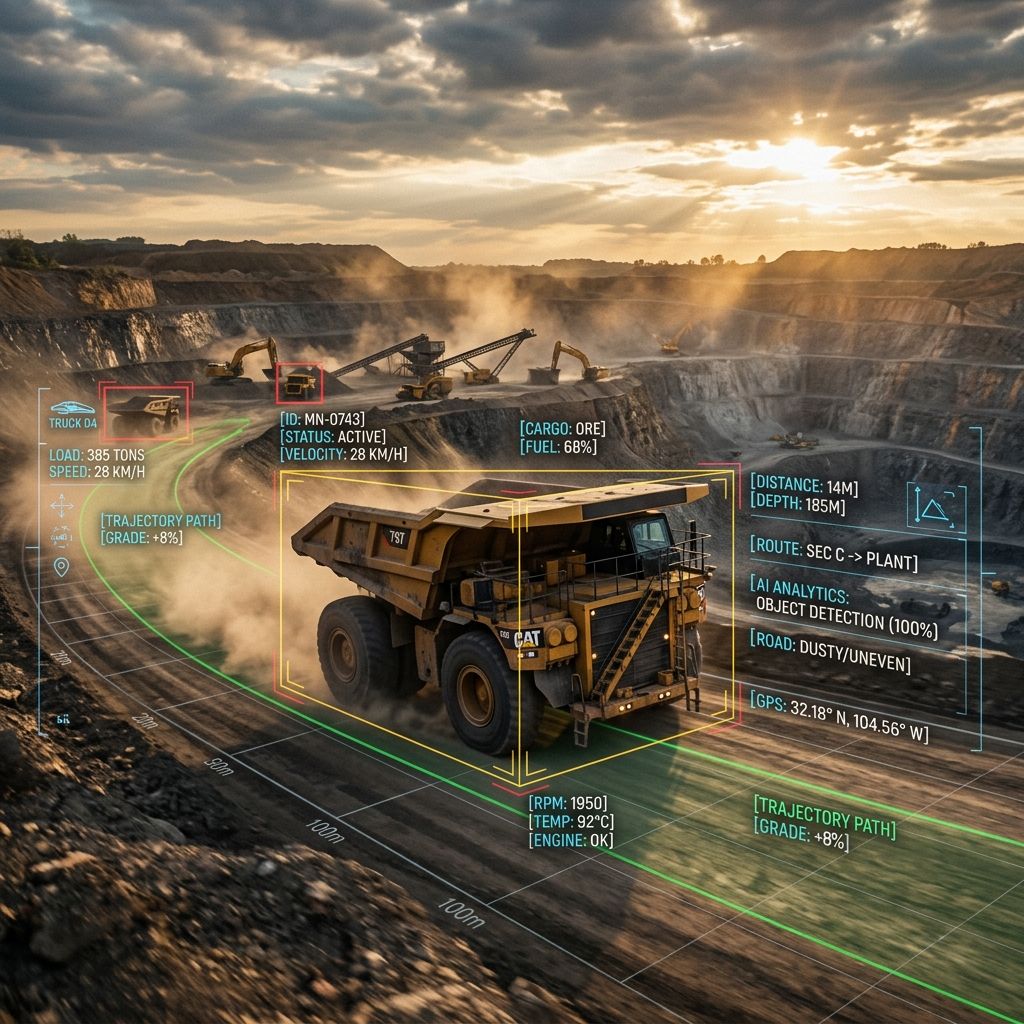
How AI is Reducing Accidents in Mining Operations
Mining operations represent one of the most challenging environments for vehicle telematics. Massive dump trucks, unpredictable terrain, pervasive dust, and remote locations with limited connectivity create a perfect storm of operational hazards. However, the introduction of specialized AI telematics is dramatically altering the safety landscape.
The Challenge of Extreme Environments
In traditional setups, limited visibility (blind spots the size of small houses) and driver fatigue during long, monotonous shifts are primary contributors to vehicle-related incidents. Conventional sensor systems often fail in these environments, triggering false positives due to dust, mud, or extreme weather.
Deploying Advanced Driver State Monitoring (DSM)
In a recent deployment across three major extraction sites in West Africa, AI-Karangué implemented our ruggedized DSM and ADAS solutions. The DSM cameras utilize infrared technology to monitor driver eye-closure, gaze direction, and head posture, completely unaffected by the darkness of a night shift or the glare of the African sun.
When the system detects fatigue or distraction—such as the use of a mobile phone—it immediately triggers an in-cab auditory alert and a seat vibration, waking the driver instantly. Simultaneously, a short video clip is sent via low-bandwidth satellite or local Wi-Fi mesh to the site safety manager.
The Results: A 42% Reduction in Incidents
The data over a 12-month period was unequivocal. The sites reported a42% reduction in reportable vehicle incidentsand a 60% drop in near-miss events. The ROI was realized not only in reduced equipment damage but, most importantly, in ensuring that every operator returned home safely after their shift.
Mining operators can no longer afford to rely on outdated safety protocols. The era of AI-assisted heavy machinery is here, and it is saving lives.